
What keeps the site working
Layout led design
Power and lighting are planned around movement, equipment and working patterns.
Room for change
Current and future loads are considered before the installation is fixed in place.
Joined-up sequencing
Work is coordinated with other trades and site constraints from the outset.
Electrical installations that suit the way the site runs
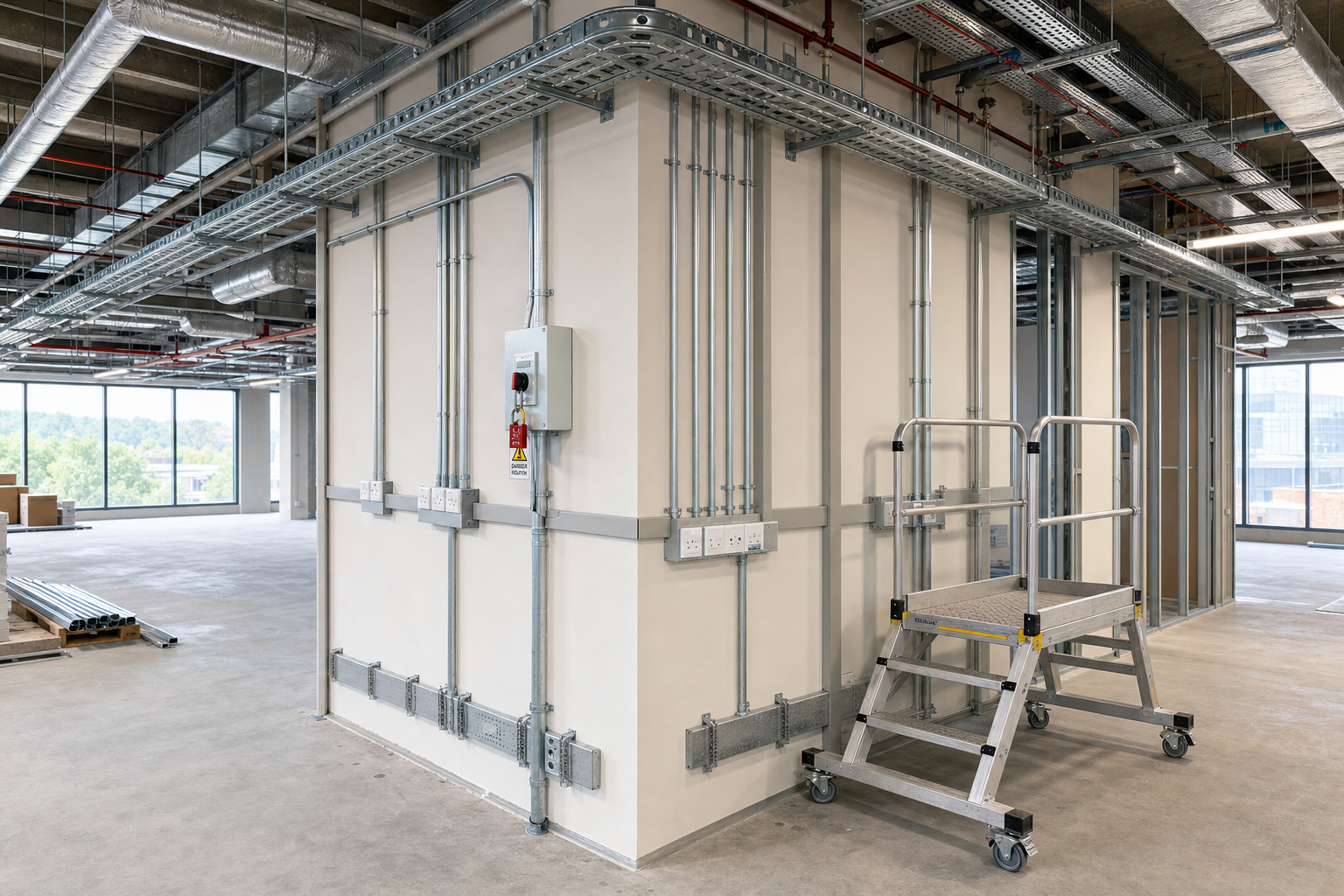
Commercial premises need electrics that suit the way the site operates, not a generic layout copied from somewhere else. We plan commercial electrical work around the building use, the working pattern, the equipment demand and the routes available for power and lighting. That can involve distribution equipment, general power, dedicated supplies, controls, lighting and cable containment. With I.P.S Electrical Installations Ltd, the early discussion is about what the premises needs to do each day and what it may need to do next year as well.
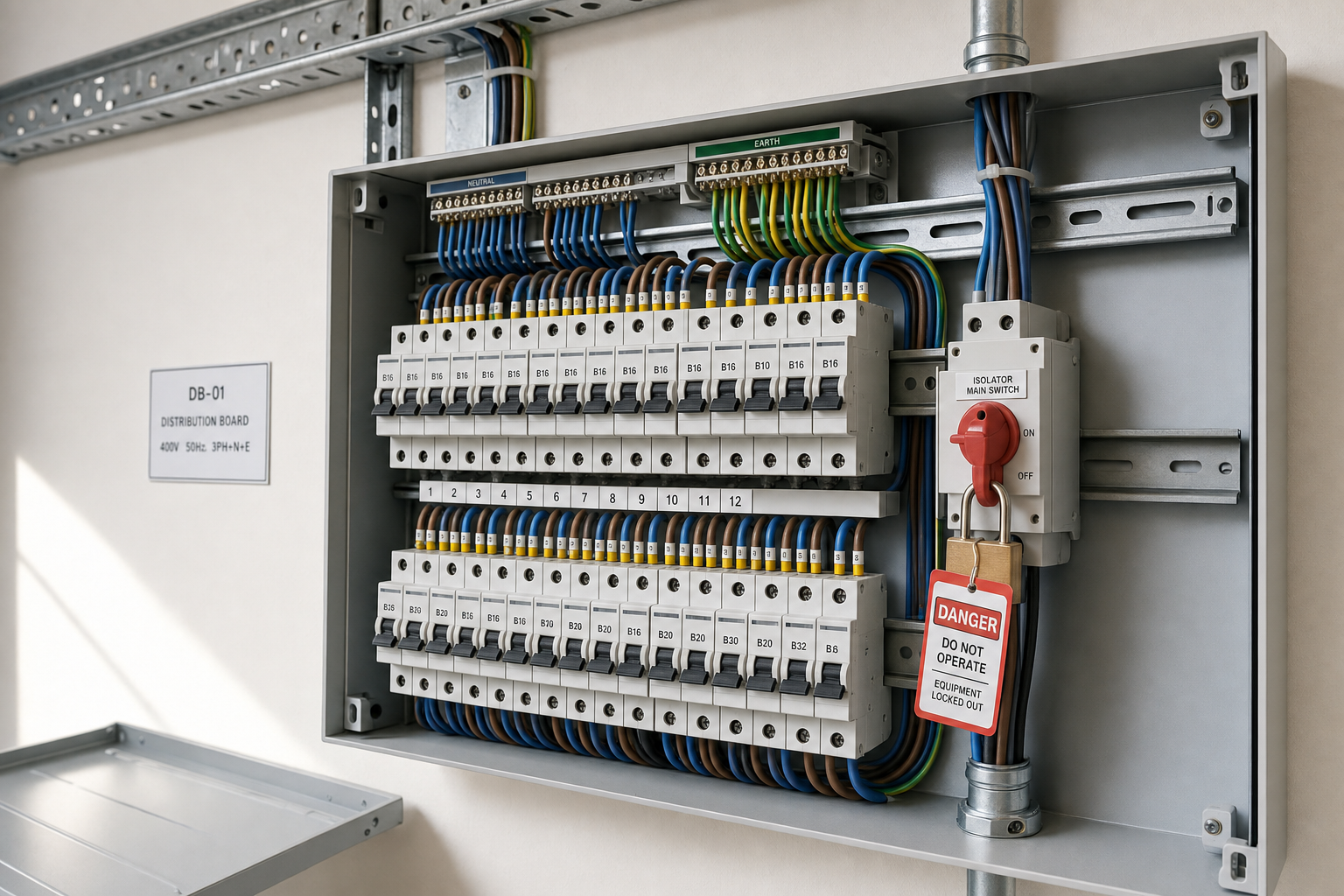
Coordinating the work so the site keeps moving
Fit-outs and alterations work better when the electrical side is sequenced with everyone else on site. We coordinate with owners, facilities contacts and other trades so access, shutdowns and installation stages are understood before work begins. Then we carry the job through testing and handover with clear information at the end. Choose I.P.S Electrical Installations Ltd when you want current loads and future expansion thought through properly, because adding power twice is usually the expensive version of doing it once.
Frequently asked questions
Can work be planned around business hours?
In many cases, yes. The best approach depends on the premises, the type of installation and any shutdowns or access restrictions on site. If working hours matter, tell us early so we can discuss the practical options and sequence the job in a way that suits the site as well as the work.
How do you decide the power and lighting layout?
We start with the way the premises is used, the equipment load, the working pattern and the physical layout of the space. From there, we can judge where general power, dedicated supplies, lighting and controls need to go so the installation supports daily operation rather than getting in its way.
What information helps with a commercial enquiry?
A clear outline of the premises type, current use, planned changes, equipment requirements and any access or timing limits is very useful. Drawings, photos and a note of any dedicated power needs help as well. The fuller the starting brief, the easier it is to discuss the right next step.