
What good diagnosis gives you
An actual cause
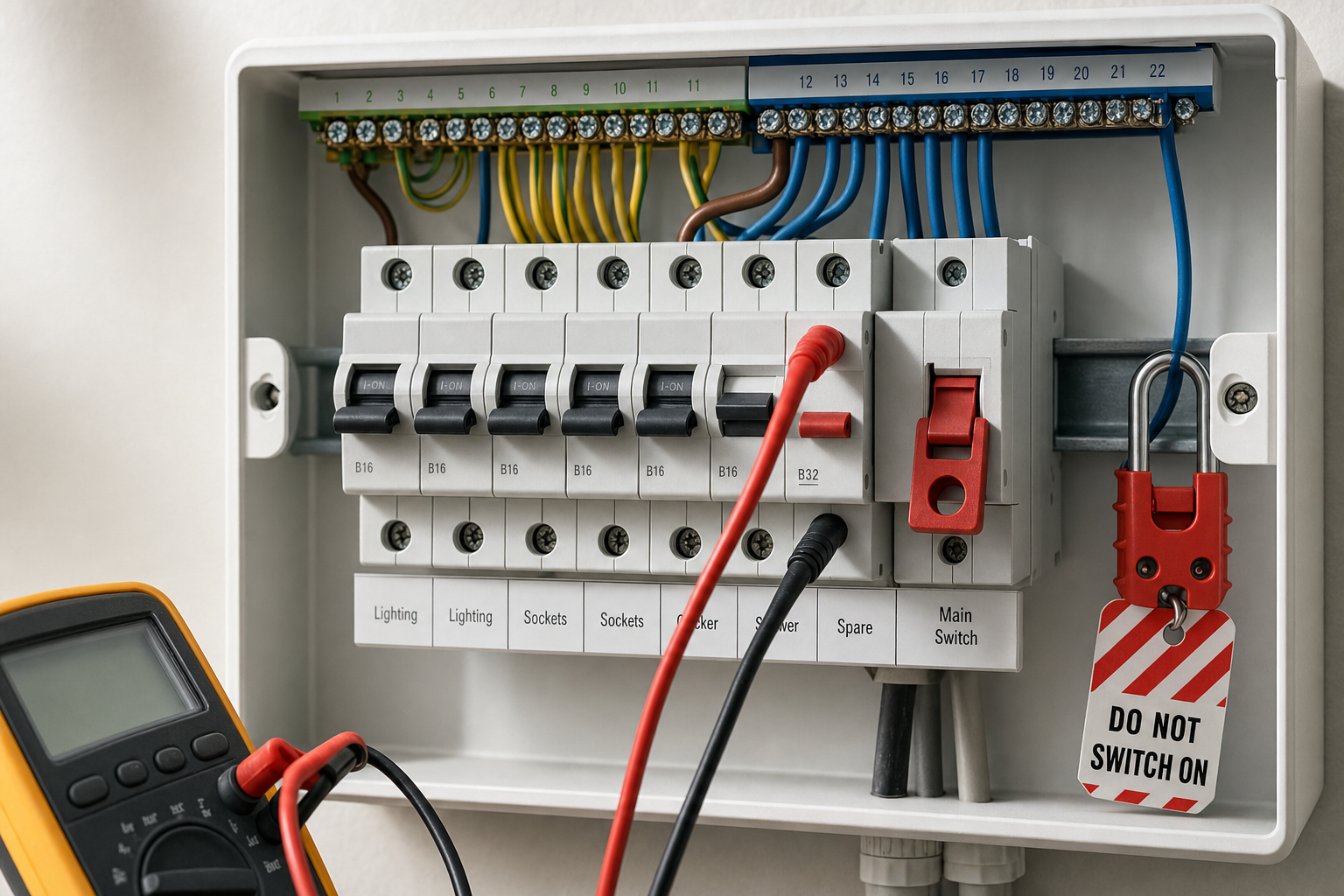
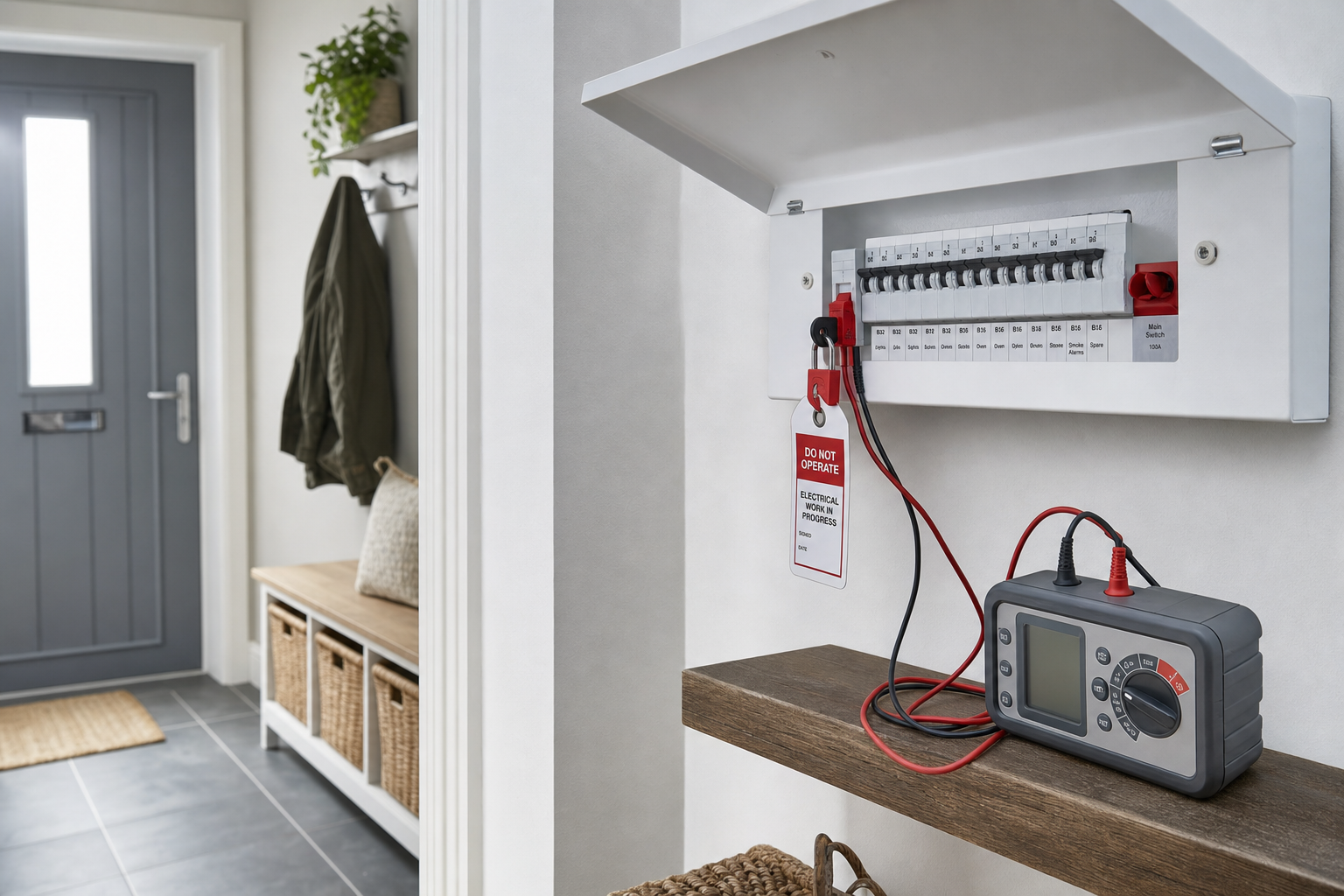
Testing and isolation are used to trace the fault instead of chasing symptoms.
Better repair choices
Once the source is known, we can target the fix rather than replace parts blindly.
Clues that get used
Timing, weather and appliance use all help shape the investigation.
Tracing the cause instead of chasing the symptoms
Repeated tripping, flickering lights and dead sockets are annoying enough. They are worse when the same reset seems to work for a while and then the problem comes back at the least helpful moment. Electrical fault finding is about getting to the source of that behaviour. We follow the symptoms, isolate circuits, inspect what we can see and use testing to narrow the cause down properly. With I.P.S Electrical Installations Ltd, the aim is not to guess cleverly. It is to identify what is failing and why.
Why timing and patterns often tell the real story
Intermittent faults often leave a trail if you know where to look. Timing, weather, appliance use and recent changes to the installation can all help explain what is triggering the issue. Once we know what the fault is doing, we can target the repair, replace a failed component or recommend wider remedial work if the problem runs deeper. Choose I.P.S Electrical Installations Ltd if you want a clear answer instead of repeated resets and random replacements that never really settle the issue.
Frequently asked questions
What symptoms usually need fault finding?
Repeated tripping, flickering lights, dead sockets, partial loss of power and other odd circuit behaviour are common reasons. Fault finding is useful when the cause is not obvious and the same problem keeps returning, because it focuses on tracing the source instead of just resetting or swapping parts.
Why do intermittent faults take explaining?
Because the timing can be the clue. A fault that appears only in wet weather, when a certain appliance is used or after another change in the property may point in a very different direction from a constant fault. Those details help narrow the cause before and during testing.
Does fault finding always end with a repair on the day?
Not always. Sometimes the cause is identified and repaired there and then. In other cases, the diagnosis shows that a part needs ordering or that wider remedial work is required. The useful part is that you know what the fault actually is, rather than continuing with guesswork.